
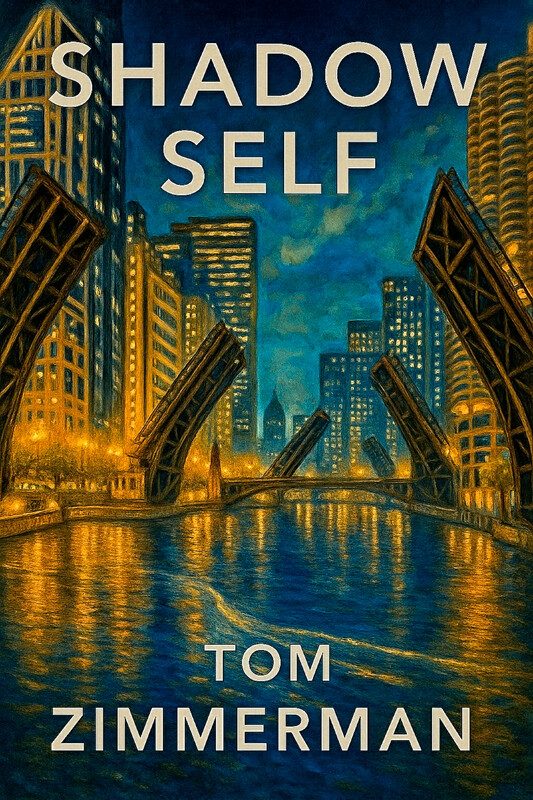
SHADOW SELF
Tom Zimmerman
114 Pages
United States
English
SHADOW SELF A Feature Film by Tom Zimmerman
Genre: Crime Drama / Neo-Noir / Coming-of-Age Runtime: 120 Minutes
Logline:
In 1968 Chicago, a blue-collar teen determined to outrun his future is pulled into a mob-run smuggling operation, where he must harness the ruthless shadow within him before a violent turf war turns him—and the people he loves—into collateral damage.
Why It Matters. It explores the pressures young people face — ambition, the fear of stagnation, and the seductive promise of shortcuts. The story is not about escaping darkness but learning to live with it responsibly. Set in a city on fire, the film examines the cost of growing up when power is available, but integrity is not free.
Shadow Self is a character-driven coming-of-age drama, with crime functioning as pressure rather than propulsion. The story is designed to track a gradual moral awakening — how a teenage boy’s appetite for control, risk, and competence forms long before it finds a criminal outlet. While the plot elements escalate later, the inciting force is internal and behavioral, not procedural. The script prioritizes psychology, restraint, and lived detail over traditional crime pacing, and is intended to be read as a study of how a young man becomes capable of harm — and what it costs him to contain it.
Tom Zimmerman writes, paints, and photographs from the marrow of the Midwest. He’s worked thirty five jobs—from pounding out newspaper copy to CEO of an international consumer package goods company. His art lives at the crossroads of grit and grace, where working class lives are forged and sometimes fractured.
Shadow Self grew out of my own memories of coming of age on Chicago’s South Side in the late 1960s. It’s a story about a restless, working-class kid caught between two futures: the narrow path of hard labor and obligation, and the seductive danger of quick money in the criminal underworld.
At its heart, the script is about identity — the masks we wear, the voices we listen to, and the darker impulses Carl Jung called “the shadow.” For Tom, the protagonist, the shadow takes the form of temptation, violence, and betrayal — but also the hunger to define himself outside the limits set by family, church, and neighborhood.
The film is rooted in a gritty realism: pizzerias, boiler rooms, auto shops, Catholic school corridors. But it’s also a psychological journey, where moments of silence, menace, and memory matter as much as the plot twists. My aim is to make Shadow Self both a coming-of-age story and a thriller — a portrait of a boy standing on the edge of adulthood, staring at two roads, and knowing one wrong step could cost him everything.

Tom Zimmerman